E-commerce · Web · 2021
Darsi
A high-performance multivendor e-commerce ecosystem designed to scale brand reach and streamline the customer shopping experience.
Overview
Darsi is a multivendor e-commerce platform built for the complexity of a modern online marketplace. A single-store solution serves one brand. Darsi gives many independent vendors their own storefronts, inventory and branding inside one shared ecosystem, and connects niche sellers with a global customer base.
We designed and built the platform end to end: the customer marketplace, branded vendor storefronts, a multi-cart checkout that splits orders per seller, a scalable product catalogue, and the vendor-side "Store Manager" for running a shop day to day.
The challenge
Small and mid-sized sellers lacked the enterprise-level tools they needed to build a distinct online presence. Standard single-store platforms weren't built for a marketplace either. They couldn't handle multiple vendors, mixed carts and separate order management in one place.
The hard part is that a marketplace has two sets of customers with opposite needs:
- Shoppers want one store: one search, one cart, one payment.
- Vendors want their own business: their brand, their catalogue, their orders, their customers' messages.
The platform had to deliver both at the same time. A cart holding items from three shops still has to feel like one purchase, while each shop sees only its own order, with its own shipping, and gets paid for its own items. Doing that across diverse product categories and thousands of SKUs, with real-time pricing and stock, made the data model and checkout logic the core of the project.
Goals
- Give each vendor a branded storefront and full control of their catalogue, without technical overhead.
- Let customers buy from several vendors in one checkout.
- Keep every seller's orders isolated and manageable on their own terms.
- Support diverse categories with advanced filtering and real-time pricing and inventory.
- Build trust between buyers and vendors through secure payments and direct messaging.
Our approach
We split the product along its two audiences and connected them through shared data. On the customer side, we designed a single, consistent marketplace: the same navigation, search and product presentation wherever you are, with the vendor clearly credited on every product. On the vendor side, we built the Store Manager, a workspace that treats each seller as the owner of their own business.
The checkout was where these two worlds meet, so we designed it first. Unified marketplace logic in the backend lets a customer hold items from several vendors in one cart, then splits the order so each seller's portion is isolated, with its own shipping option and delivery estimate. The customer pays once, and the split happens behind the scenes.
For the catalogue we chose a flexible data structure rather than a fixed product template. Ceramics, headphones and candles have very different attributes, and the structure lets each category carry the variants and details it needs while still supporting consistent filtering, pricing and stock tracking across the whole marketplace.
What we built
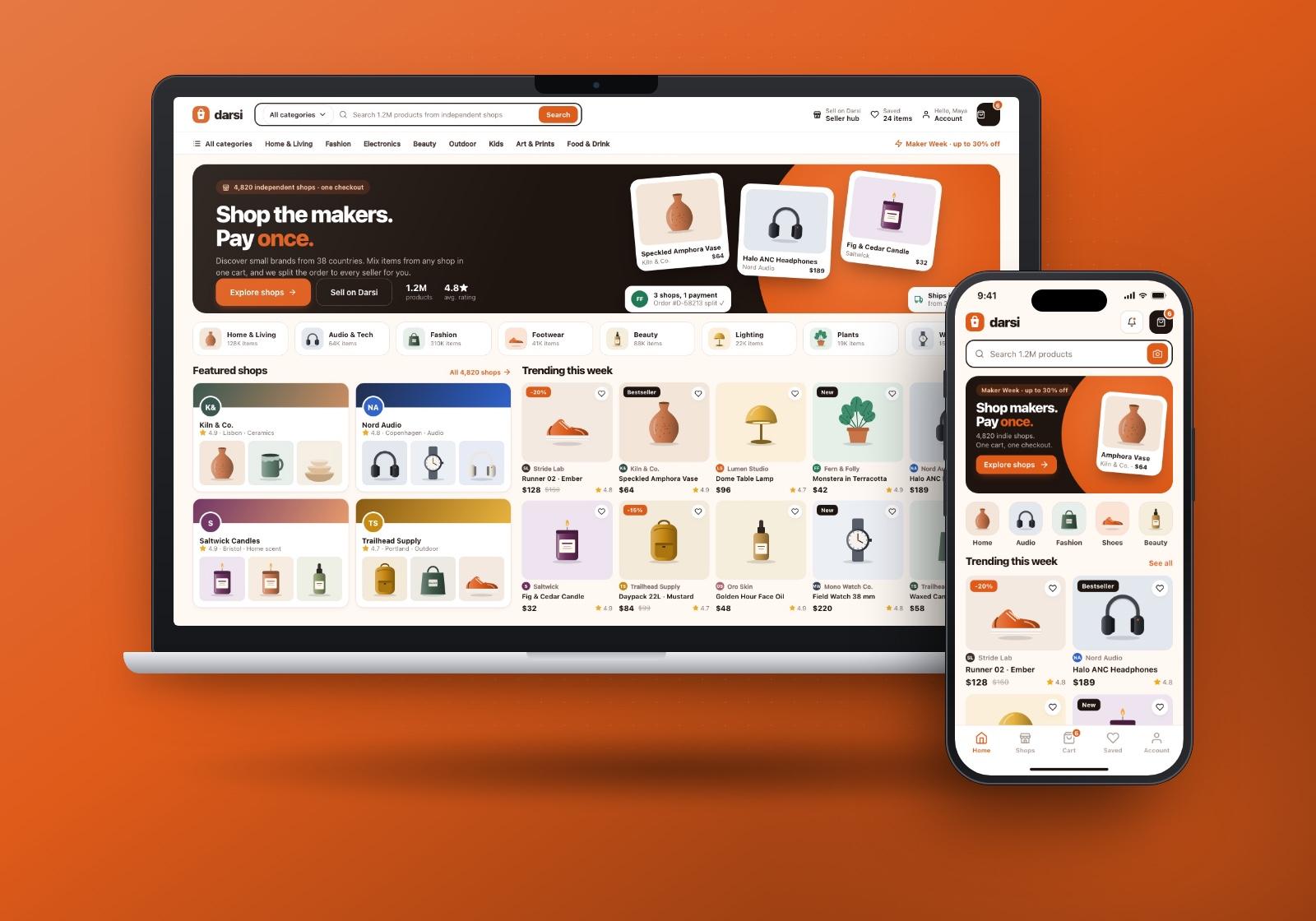
Marketplace home
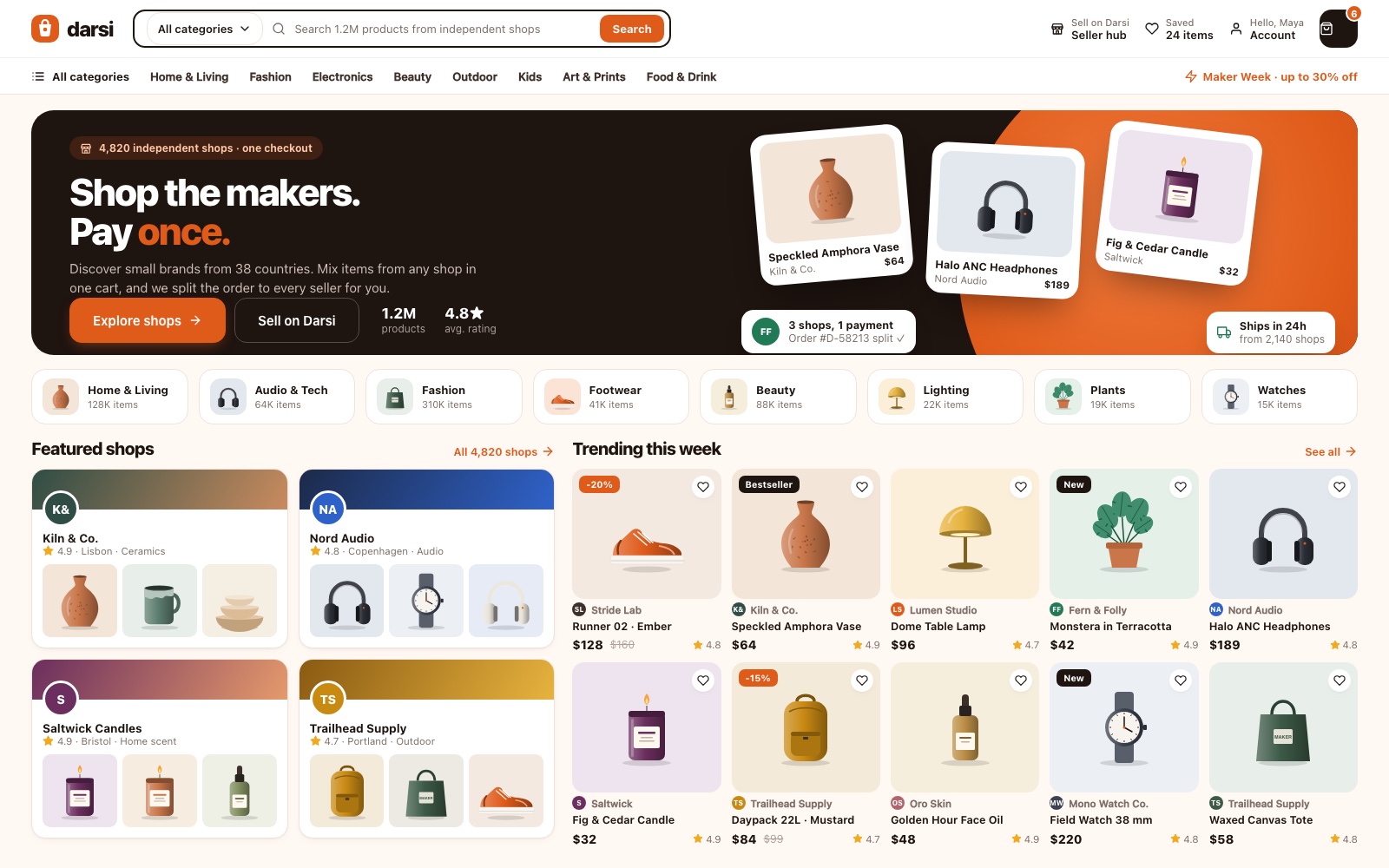
The home page introduces the marketplace's core promise: discover independent brands, mix items from any shop and pay once. Shoppers can browse by category, explore featured shops and see trending products, with each product card naming the vendor it comes from.
Branded vendor storefronts
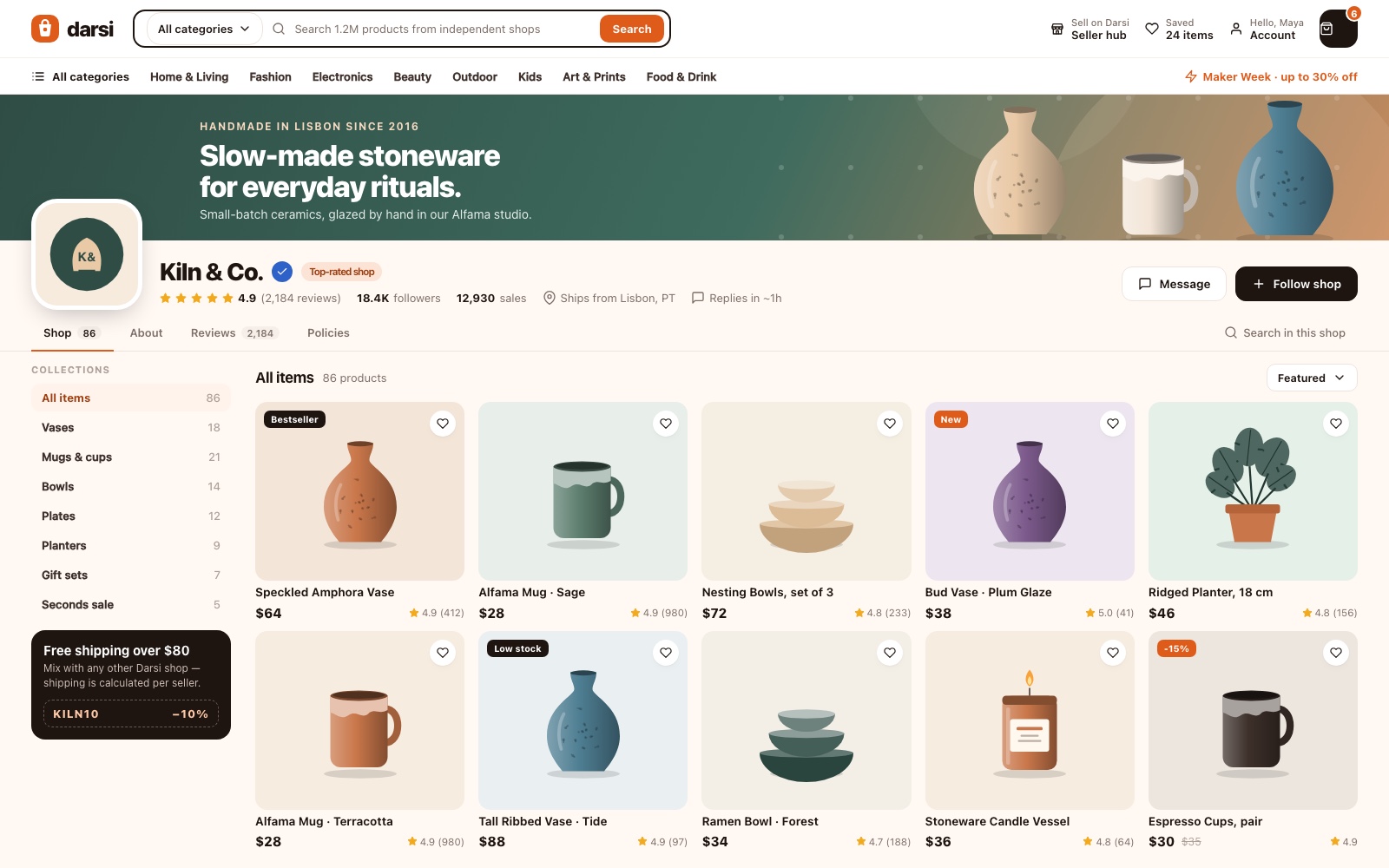
Every vendor gets a storefront that looks like their own. Vendors curate their identity with a custom banner, logo and story, and the shop page shows ratings, followers, sales and where it ships from.
- Collections that organize the vendor's catalogue
- Shop-level actions to message the vendor or follow the shop
- Vendor-specific offers and shipping thresholds
Product page
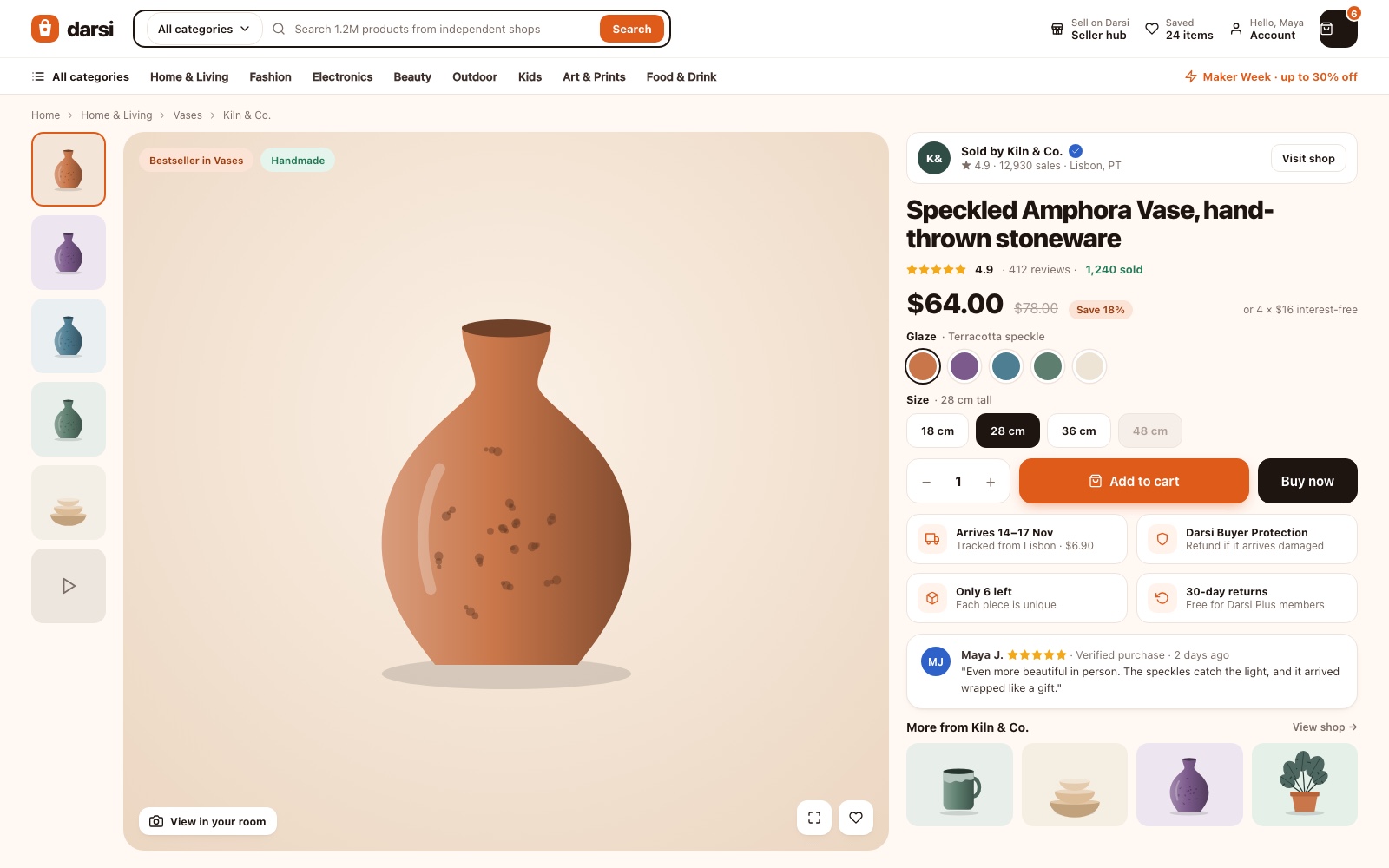
Product pages pair a high-resolution media gallery with rich product detail. The vendor badge sits at the top, linking back to the shop, and variant selectors (glaze and size in this case) reflect real-time stock, so unavailable options can't be chosen.
- Price, discounts and payment options next to add to cart and buy now
- Delivery estimate, buyer protection, stock level and returns information
- Reviews and more products from the same vendor
Multi-vendor cart and checkout
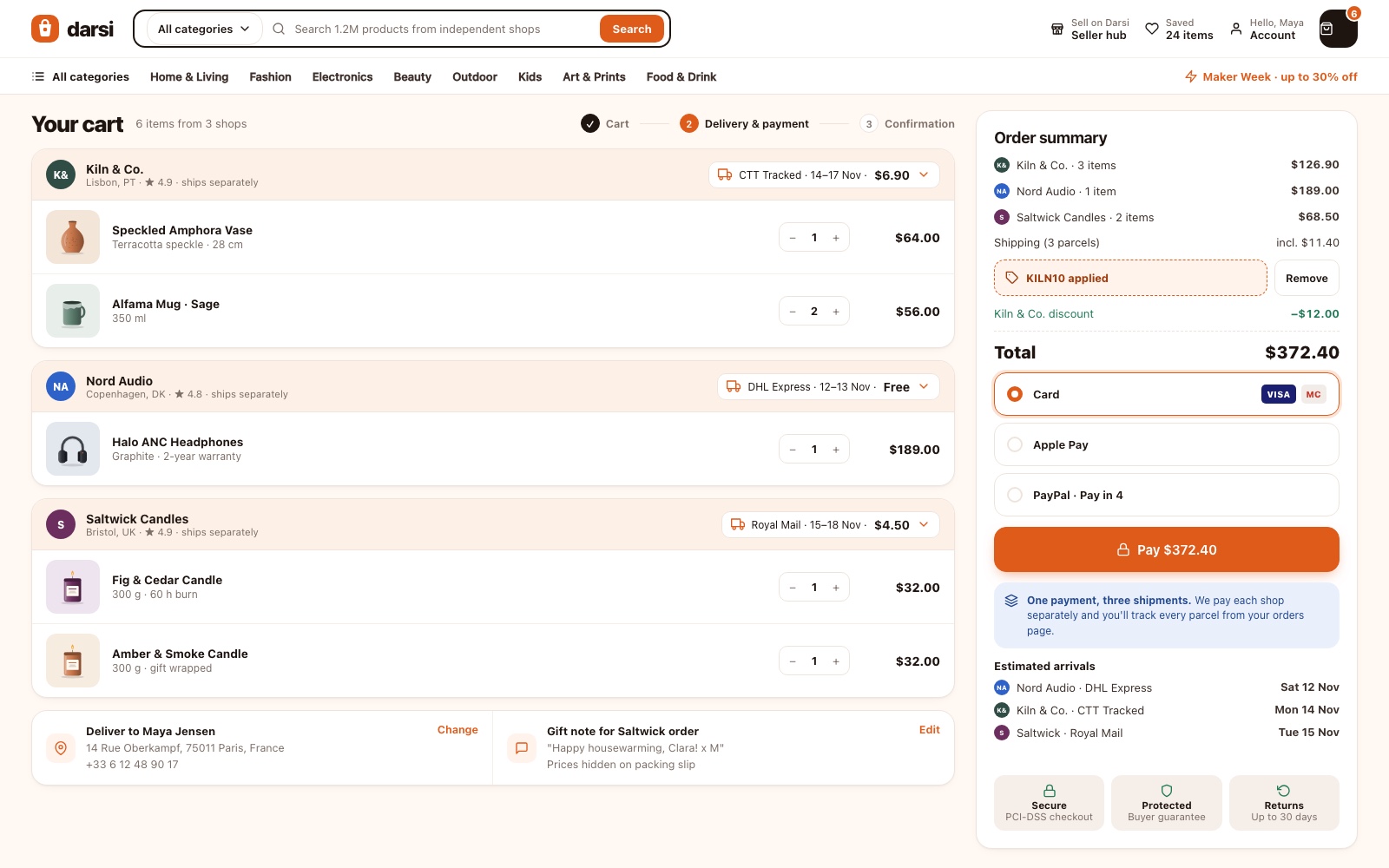
The cart groups items by vendor, and each group has its own shipping method and delivery date. The order summary brings everything back together into one total and one payment, including vendor-specific discounts.
- Separate estimated arrivals per shipment
- Gift notes and delivery details set per order
- Secure checkout with a choice of payment methods
Vendor Store Manager
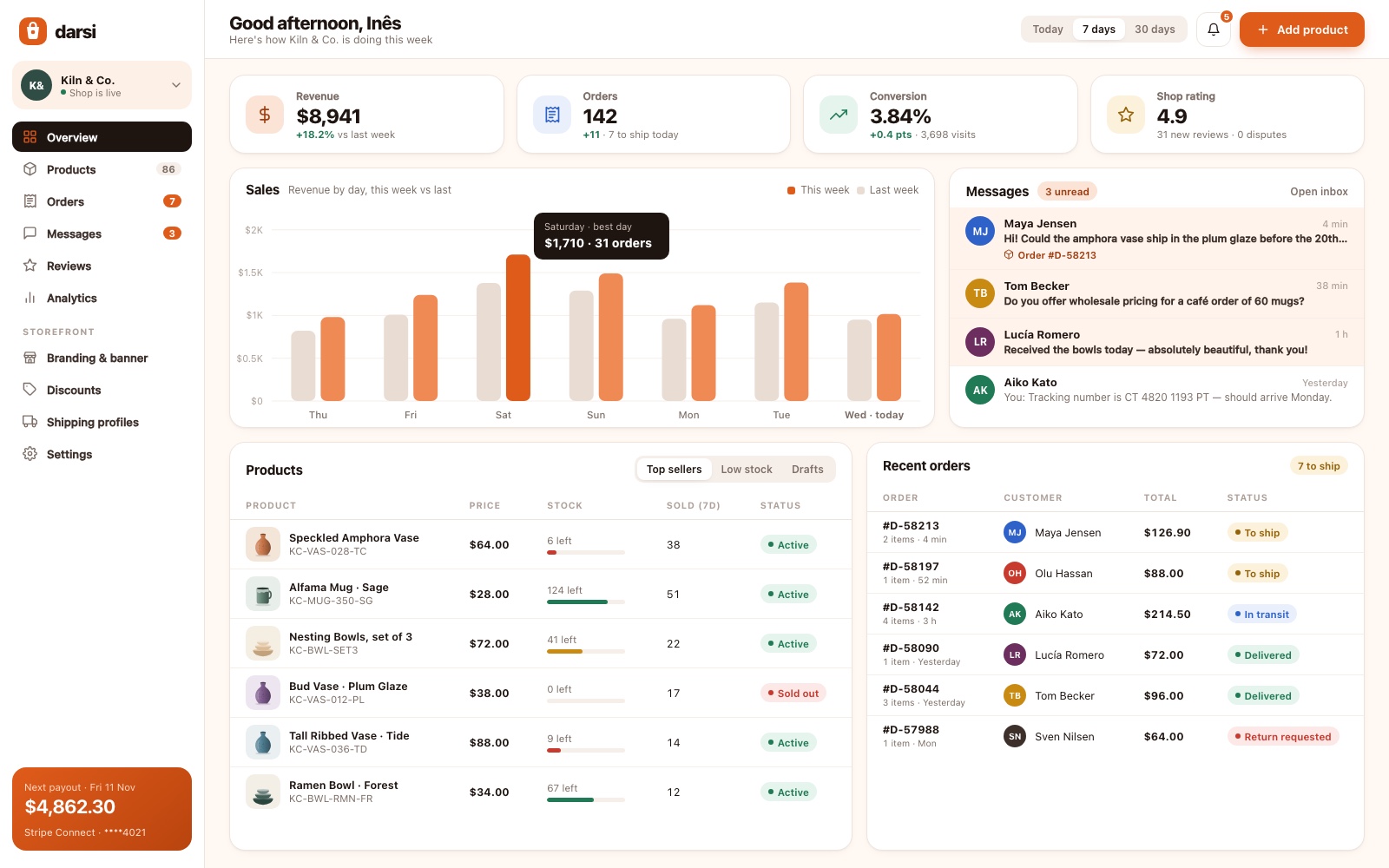
The Store Manager is where vendors run their shop. It brings sales, products, orders and customer messages into one dashboard.
- Revenue, orders, conversion and shop rating at a glance, with a daily sales chart
- Product list with price, stock levels, units sold and status
- Recent orders with fulfilment status and an inbox for buyer messages
- Storefront tools for branding, discounts and shipping profiles
Under the hood
- Multi-cart order splitting. Backend marketplace logic accepts a single checkout and divides it into isolated per-vendor orders, each with its own fulfilment, shipping and status.
- Flexible catalogue model. A data structure that supports diverse categories and variants, with advanced filtering and real-time pricing and inventory tracking across thousands of SKUs.
- Secure payment gateways. Payments are processed through secure gateways, with one customer payment covering items from several vendors.
- Transaction and communication hub. Internal buyer-vendor messaging is tied to orders, giving both sides a direct, trusted channel.
- Responsive by design. The customer experience was built to perform on both mobile and desktop.
Results
Darsi turned many independent sellers into one coherent marketplace while letting each of them keep their own identity.
- Vendor empowerment. Small and mid-sized businesses get enterprise-level tools to launch and run their online presence without technical overhead.
- User engagement. Customers get a faster, more intuitive experience on mobile and desktop, from product discovery to purchase.
- One checkout, many sellers. Shoppers buy from several vendors in a single transaction, while each seller's orders stay isolated and manageable.