Cybersecurity · Web · 2024
Cacilian
A specialized PTaaS platform that simplifies cybersecurity by transforming complex vulnerability data into actionable readiness metrics.
- Vanta API
- Secureframe API
- less time collecting compliance evidence
- 50%
- less time collecting compliance evidence
Overview
Cacilian is a Penetration Testing as a Service (PTaaS) platform that closes the gap between periodic security audits and continuous protection. Security experts and their clients work in one place, in real time, to find, analyze and fix threats. The platform's core job is to turn complex technical findings into a clear security posture that every stakeholder can understand, including those who have never read a CVSS score.
We worked on the platform as full-stack developers. Our focus was visualizing high-stakes security data and orchestrating complex testing workflows, so the product stays powerful for security teams and approachable for everyone else.
The challenge
Penetration test results usually arrive as dense technical reports. Engineers can act on them, but the executives and compliance owners who approve budgets often struggle to. A long list of vulnerabilities doesn't answer the question they actually have: how secure are we, and is it getting better?
The problems continued after the report was delivered:
- Compliance evidence was manual. Getting pen-test results into SOC 2, ISO 27001 and HIPAA audits meant exporting, reformatting and uploading evidence by hand.
- Remediation was scattered. Back-and-forth between client engineers and security researchers happened across emails and calls, which slowed fixes and lost context.
- Testing involves sensitive material. Scheduling authenticated, expert-led tests means handling real credentials for client systems, and that has to be done safely.
Goals
- Turn raw vulnerability data into readiness metrics that non-technical stakeholders can read at a glance.
- Sync pen-test results automatically into the GRC platforms clients already use for their audits.
- Orchestrate both automated scans and expert-led tests, including scheduling and secure handling of credentials.
- Bring client–researcher communication into the platform so remediation moves faster.
Our approach
We started from the question stakeholders ask most: are we ready? That led to a readiness metric at the center of the product. Raw findings, severities and remediation progress feed into a score and a set of compliance readiness bars, giving leadership one number to follow and engineers the detail behind it.
From there, we designed each screen for a specific role in the testing lifecycle:
- Leadership gets the posture dashboard and board-ready trends.
- Security leads and engineers get a findings workspace with severity, status, asset and step-by-step remediation.
- Researchers and clients share threaded conversations attached directly to each finding, so the discussion never loses its context.
- Compliance owners get integrations that push evidence to their GRC platform without manual exports.
On the backend, the engagement is the main object: scans, test phases, scope, credentials and findings all belong to one, which keeps scheduling and reporting consistent.
What we built
Security posture dashboard
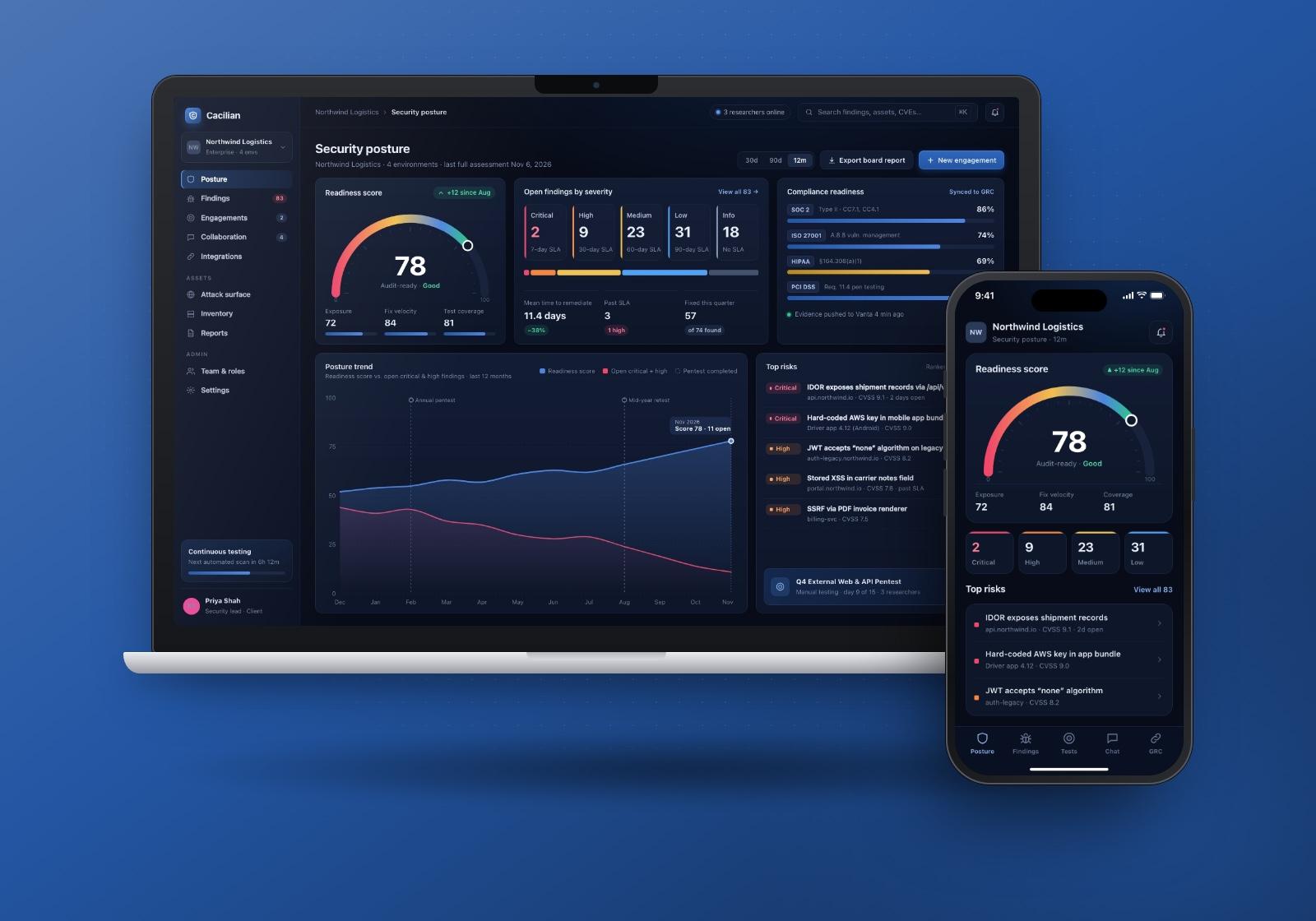
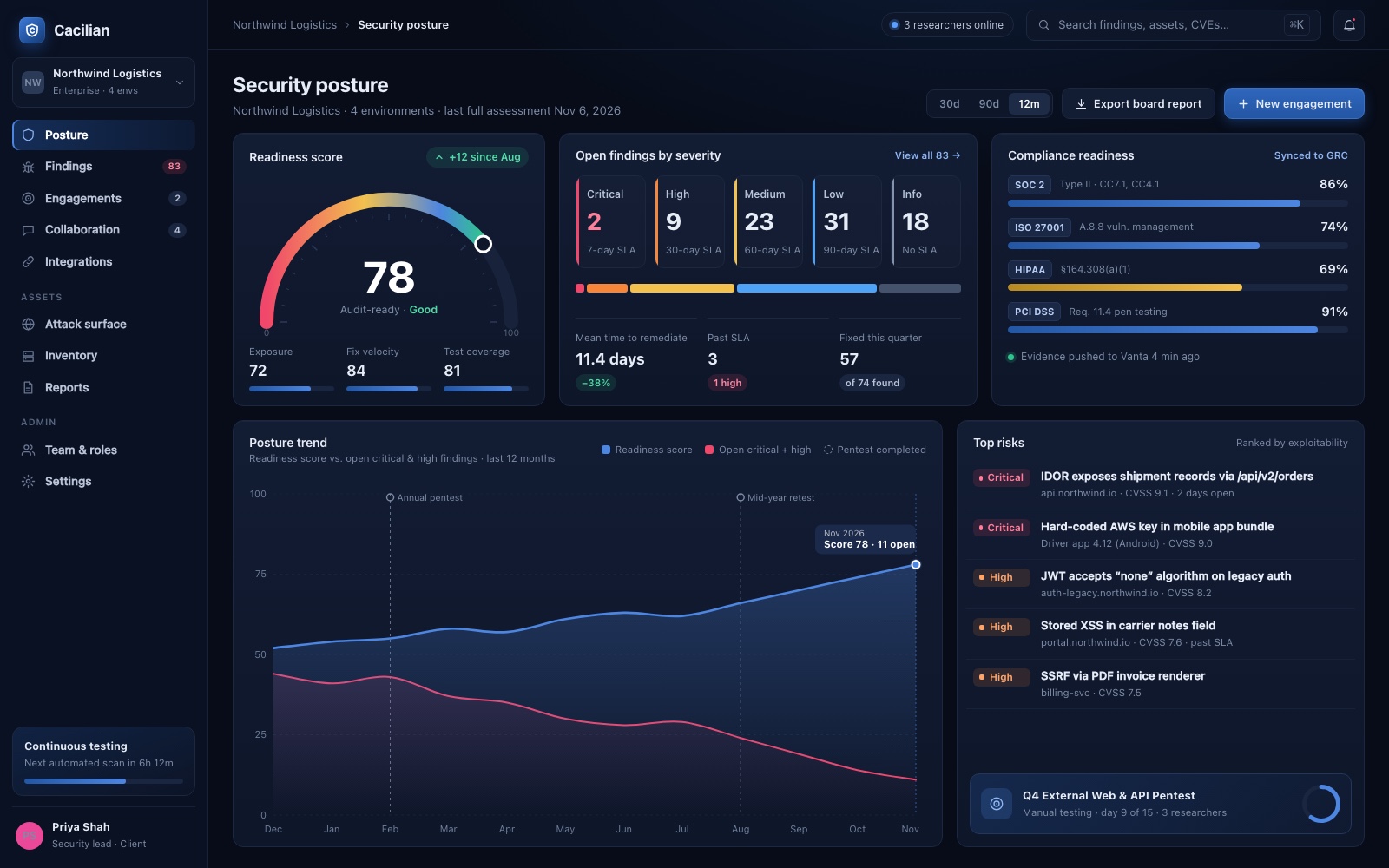
The dashboard aggregates every open finding into a readiness score, shown on a gauge with supporting measures for exposure, fix velocity and test coverage. Next to it sit findings by severity with their SLA windows, compliance readiness per framework, a posture trend over time, and a ranked list of top risks.
Findings workspace
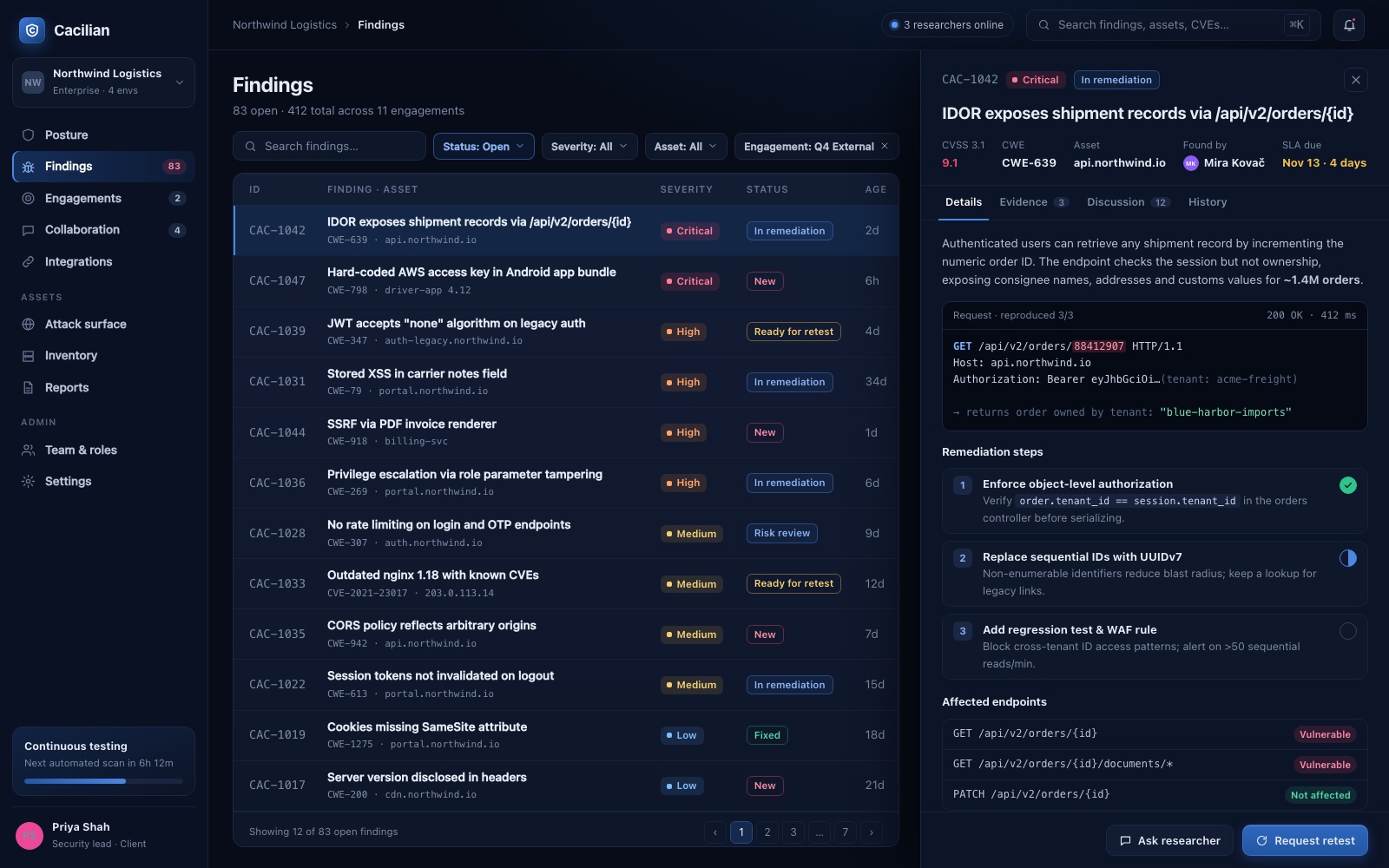
The findings list gives security teams a filterable table of every vulnerability, with its severity, status, affected asset and age. Selecting a finding opens a detail drawer with a description, a reproduced request, affected endpoints and numbered remediation steps that track progress. From there, a client can ask the researcher a question or request a retest.
Pen-test engagement orchestration
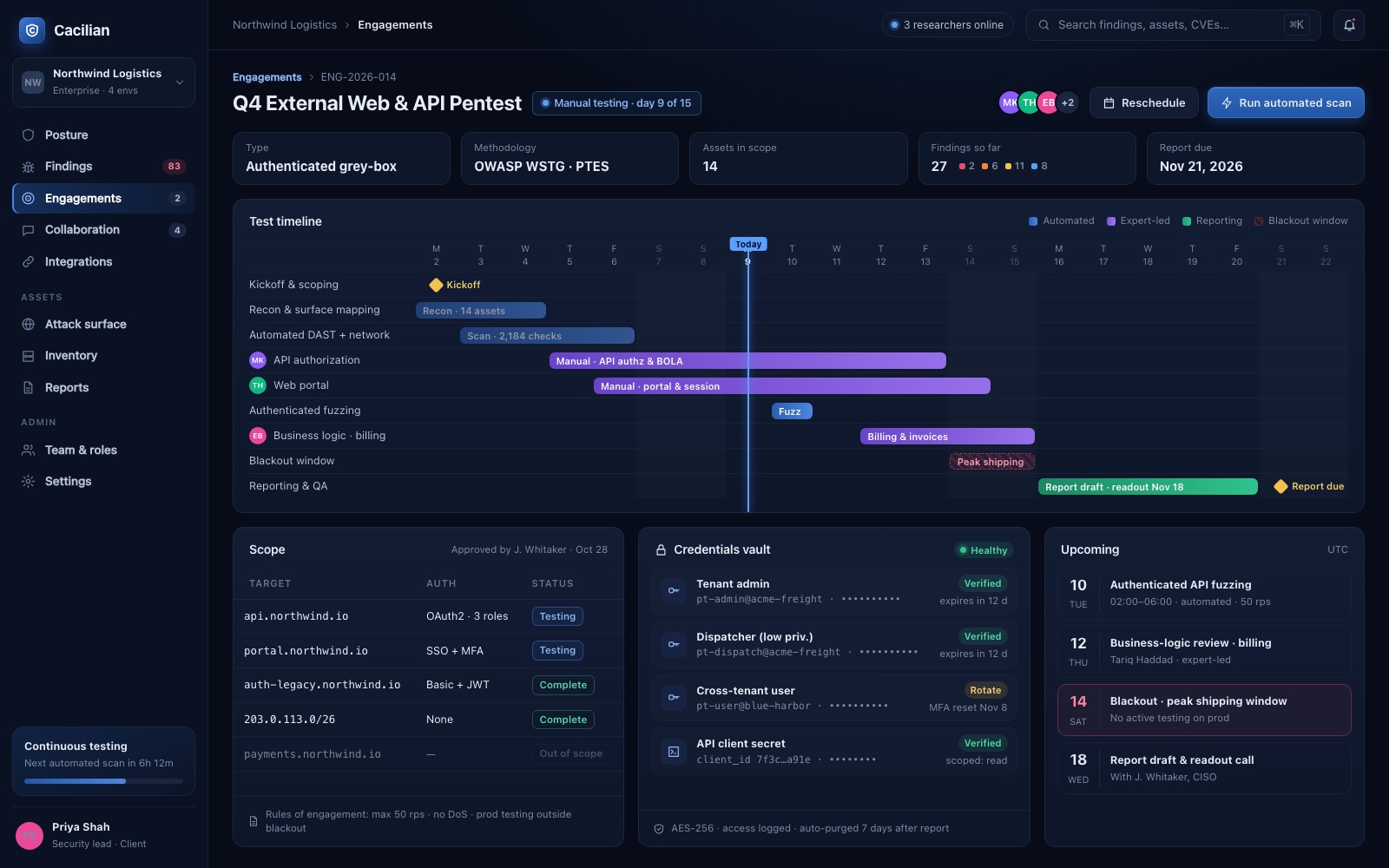
Each engagement brings together the test timeline, scope and credentials. The timeline places automated scan phases next to expert-led manual testing, reporting and agreed blackout windows when no testing runs. Scope lists each approved target and its testing status. A credentials vault shows whether each test account is verified or due for rotation.
- Scheduling for automated scans and authenticated, expert-led tests
- Scope management with rules of engagement
- Secure handling of sensitive testing credentials
Researcher collaboration
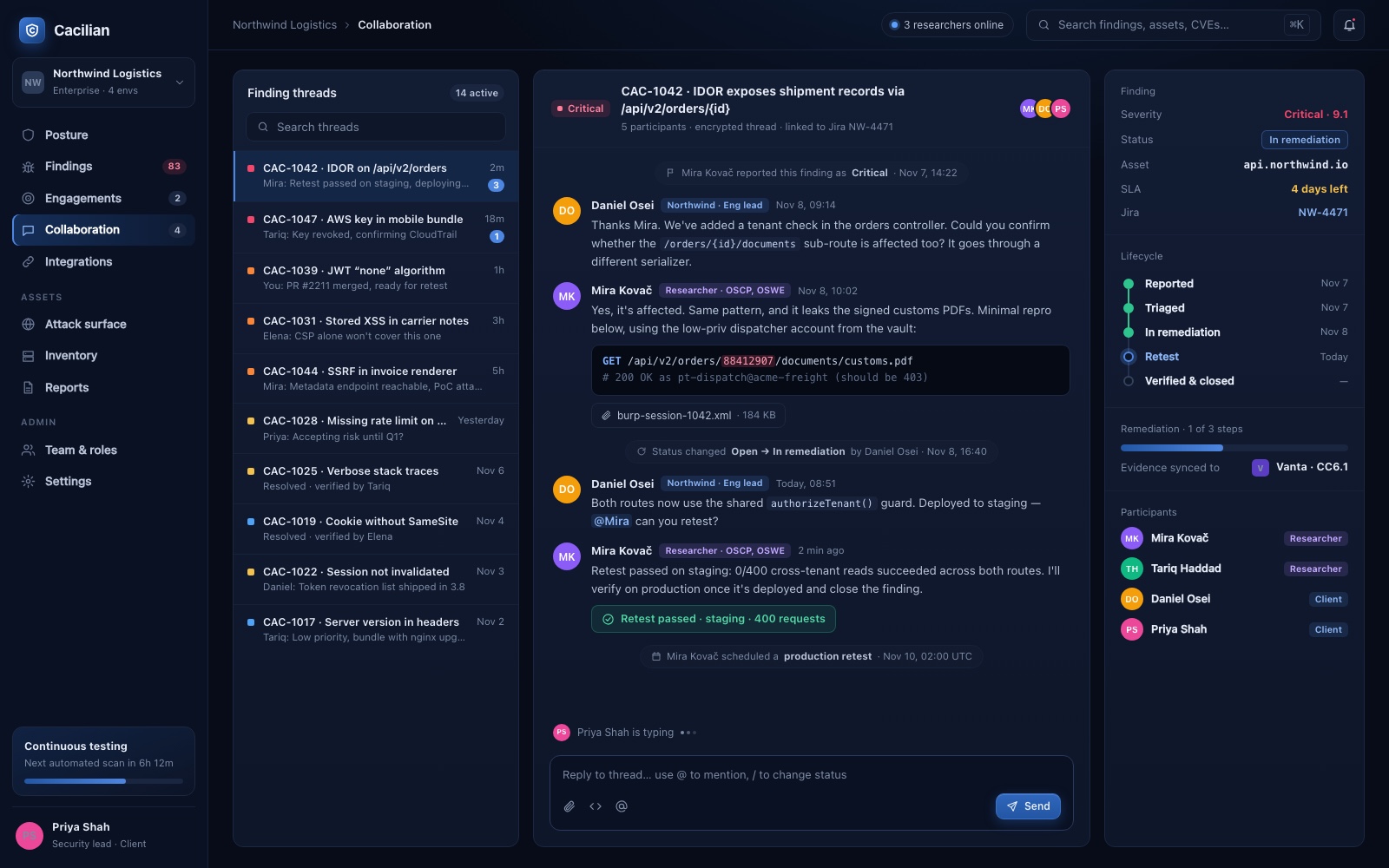
Clients talk directly with security researchers inside the platform. Every conversation is a thread attached to a specific finding, so code snippets, reproduction details, attachments and status changes stay together. A side panel tracks the finding's lifecycle from reported through triage, remediation and retest to verified and closed.
GRC integrations
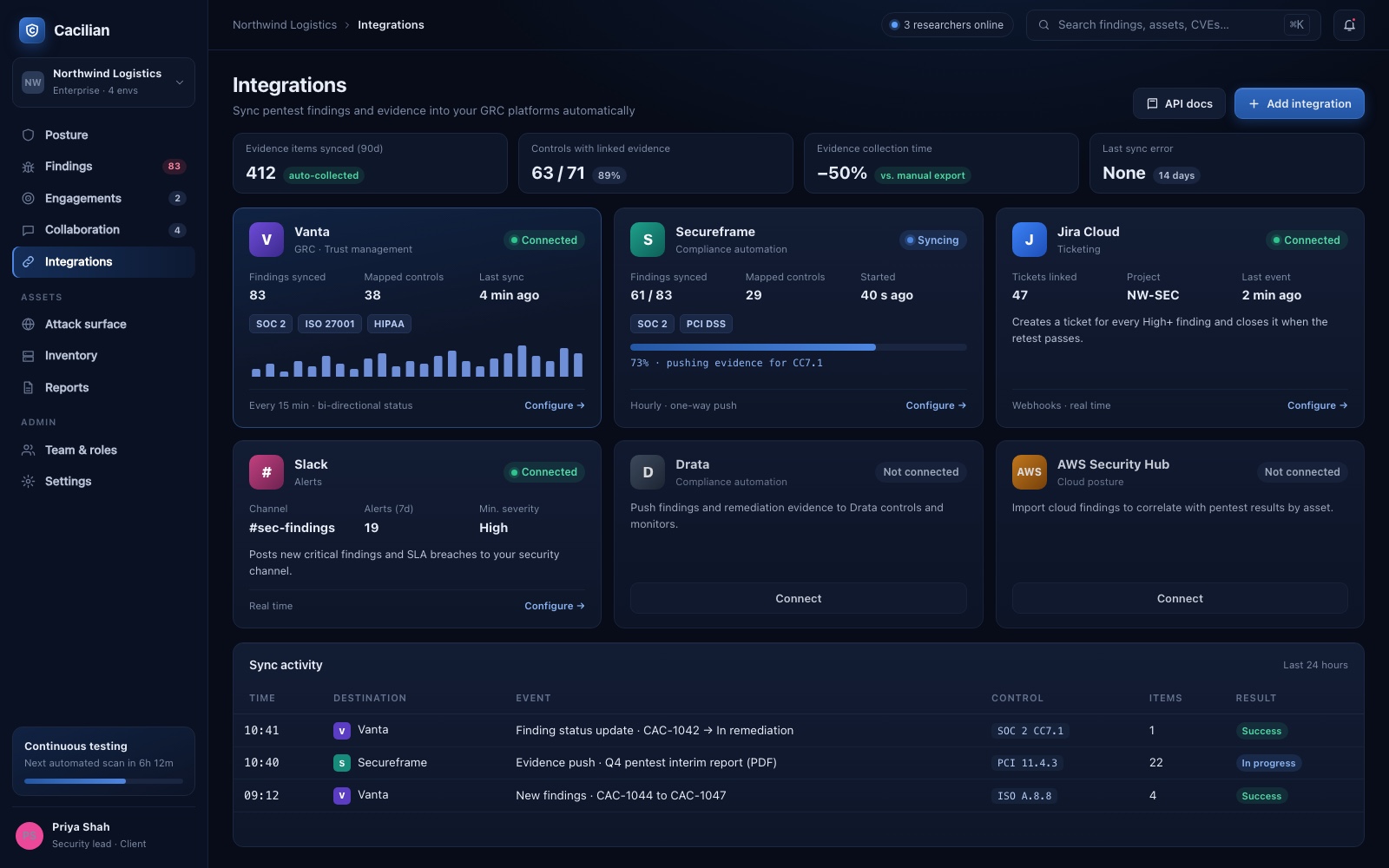
The integrations hub connects Cacilian to Governance, Risk and Compliance platforms, including Vanta and Secureframe. Findings and remediation evidence sync automatically and map to the controls clients need for SOC 2, ISO 27001 and HIPAA audits. Connection cards show sync status, and an activity log records every push.
Under the hood
- Readiness scoring logic. We built the logic that converts raw vulnerability data (severity, status, SLA and remediation progress) into readiness metrics, so every view shows the same score.
- GRC API integrations. Integrations with the Vanta API and Secureframe API sync pen-test results and evidence, and map them to the relevant compliance controls.
- Testing lifecycle orchestration. Backend logic manages the full lifecycle of automated scans and authenticated, expert-led tests, from scheduling and scoping through execution and reporting.
- Credential security. Sensitive testing credentials are handled securely throughout an engagement, with verification and rotation status shown in the interface.
- Real-time collaboration. Finding threads update live between clients and researchers, so remediation conversations and status changes reach everyone as they happen.
Results
- 50% less time collecting compliance evidence. Automated GRC syncing replaced manual evidence exports for SOC 2, ISO 27001 and HIPAA audits.
- Clearer risk for decision-makers. Visual readiness scoring helped non-technical stakeholders understand their risk profile, which led to faster budget approval for critical fixes.
Cacilian moved penetration testing from a periodic report toward an ongoing, shared process. Clients see where they stand, know what to fix next, and can show auditors the evidence without extra work.